
Your cafeteria vendor's FSSAI licence allows them to operate as a food business, but it does not mean your corporate cafeteria is automatically compliant.
As the premises occupier, your company still has responsibilities around the cafeteria environment, water systems, hygiene controls and oversight.
If the Maharashtra FDA inspects your corporate canteen and identifies food-safety gaps, the fact that your caterer holds an FSSAI licence does not eliminate the issue at your premises.
For Facility Managers, Admin Heads and Food Quality Heads, the real question is not whether the vendor is licensed.
It is whether the vendor's compliance is actually being verified.
Regulatory Scope
Can the FDA Inspect a Corporate Cafeteria?
Yes. Corporate cafeterias, institutional kitchens and catering operations operating on company premises can be subject to food-safety inspections.
For companies operating cafeterias in Mumbai, Navi Mumbai and elsewhere in Maharashtra, this makes vendor compliance an important part of facility-level food-safety management.
A food-safety complaint can also bring attention to the cafeteria and its operations.
The important distinction is simple:
Your caterer may operate the kitchen, but the kitchen operates inside your workplace.
That means Facility and Admin teams need visibility into the controls being followed there.
Common Misconception
Why an FSSAI Licence Alone Isn't Enough
A common corporate cafeteria arrangement looks straightforward:
Company → appoints caterer → caterer holds FSSAI licence → cafeteria operates.
The gap appears when nobody independently verifies what happens after the contract is signed.
Problem → Impact → Action
Problem: Vendor compliance is assumed rather than regularly verified. A contract may state that the caterer must comply with applicable food-safety requirements, but a contractual statement is not the same as documented verification.
Impact: If food, water, hygiene or documentation issues are discovered, the company may face:
- Internal escalation to leadership
- Employee health concerns
- Questions around cafeteria management
- Regulatory scrutiny at the premises
- Reputational consequences
Action: Move from vendor compliance by assumption to vendor compliance by verification. A documented cafeteria vendor audit creates a repeatable process for checking whether the required controls are actually in place.
Inspection Scope
What Does the FDA Check in a Corporate Canteen?
The fundamentals are similar to those checked in other food-service environments, but a corporate cafeteria has an additional layer: the facility itself has responsibilities that may sit outside the caterer's direct scope.
Key areas include:
01
FSSAI Licence
Check that the vendor's licence is:
- Current
- Appropriate for the activity
- Applicable to the operation being conducted at your premises
A licence associated with a central kitchen should not simply be assumed to cover every separate on-site operation.
For a broader understanding of food-business inspection and documentation requirements, see this FSSAI audit checklist for food businesses.
02
Food Handler Medical Records
Verify that food handlers working in the cafeteria have the required medical fitness documentation and that records are maintained.
This should also be cross-checked against the food handlers actually working at the site.
03
Water Testing
This is an area Facility Managers should pay particular attention to.
The cafeteria may be operated by the vendor, but the water may come from your building's tanks, RO system or other supply infrastructure.
A vendor's FSSAI licence does not replace the need to verify the safety of the water being used.
Regular drinking water testing can help identify water-quality risks and provide documented evidence of monitoring.
04
Food and Swab Testing
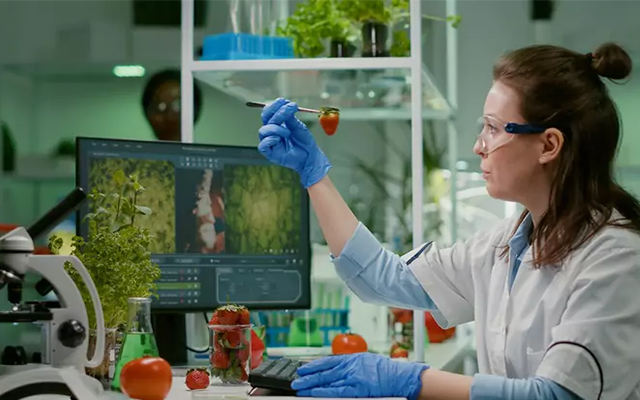
Periodic testing can provide evidence that food and food-contact surfaces are being monitored rather than relying only on visual hygiene checks.
This can include:
- High-risk food items
- Serving equipment
- Food-contact surfaces
- Relevant cafeteria surfaces
Food microbiological testing and swab testing can therefore become part of the cafeteria's documented verification process.
For Facility Managers looking at less visible hygiene risks, this guide to three invisible hygiene risks that facilities should test for provides additional context.
05
Storage and Temperature Control
Check how the cafeteria manages:
- Refrigerated and frozen foods
- Cold-chain conditions
- Raw and cooked food separation
- FIFO practices
- Food storage conditions
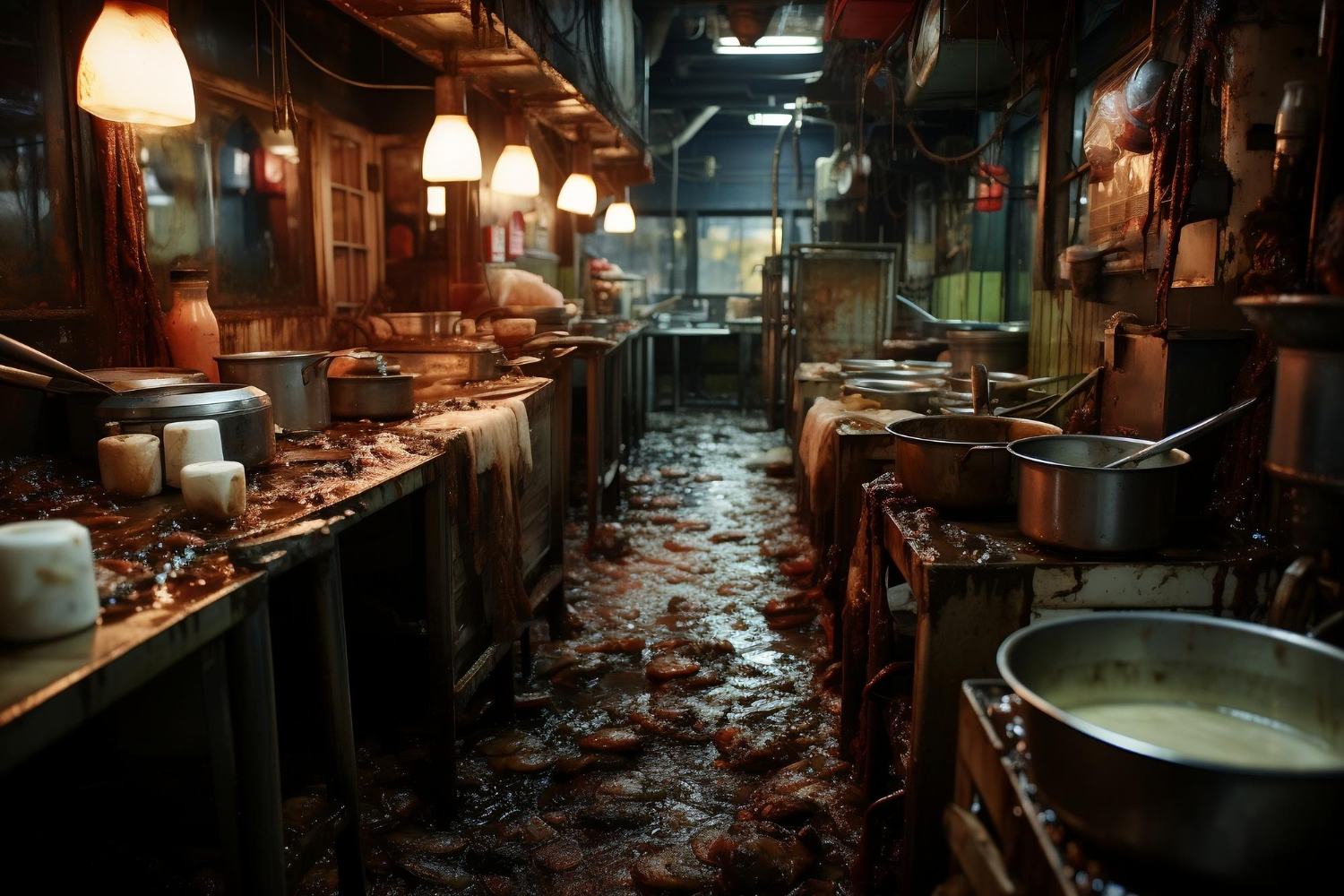
A kitchen may look clean while poor temperature or storage controls create a completely different risk.
06
Pest Control and Waste Management
Pest-control records should relate specifically to the cafeteria environment and show that required treatments and observations are being documented.
Waste handling should also have clearly defined responsibilities between the vendor and facility team.
07
FoSTaC and Food Safety Supervision
Where applicable, verify that the vendor's on-site team has the required food-safety supervision and training documentation.
Verification Framework
Corporate Cafeteria Compliance Checklist
A simple way for Facility and Admin teams to structure vendor verification is to maintain a six-point compliance checklist:
| Compliance Area | What to Verify |
|---|---|
| FSSAI licence | Validity, category and applicability to the operation |
| Medical records | Food-handler fitness records |
| Water testing | Current potable water test report |
| Food & swab testing | Periodic testing records |
| Pest control | Cafeteria-specific service and treatment records |
| FoSTaC | Food Safety Supervisor certification/training |
The objective is not to collect documents for the sake of documentation. It is to verify that the controls behind those documents are actually being followed.
Shared Responsibility
Who Is Responsible for Corporate Cafeteria Compliance?
This is where many companies have a blind spot.
The caterer is responsible for its food-business operations, but the company cannot simply assume that every cafeteria-related risk belongs to the vendor.
Consider the water supply.
If the cafeteria uses water from your building's tanks or RO system, the facility team needs to know whether that water is being tested and whether the infrastructure is maintained.
The same applies to areas where responsibility may be divided between the caterer and the facility team, such as:
Water Systems
Pest Control
Waste Management
Cleaning Responsibilities
Equipment and Infrastructure
Cafeteria Premises
The solution is to define responsibilities clearly and verify them periodically.
Independent Verification
What a Cafeteria Audit Can Find Before an FDA Inspection
A one-time vendor declaration can tell you what the vendor says is happening.
An independent audit can show what is actually happening.
"
For example, a 600-employee IT facility in Navi Mumbai relied on an annual vendor self-declaration. Its first independent swab audit found high microbial counts on serving spoons and a water storage tank that was overdue for cleaning by 11 months. The total rectification cost was under ₹2 lakh.
The important lesson wasn't the cost.
The audit found the gap before it became an external finding.
That is the value of independent cafeteria vendor verification.
Compliance Cadence
How Do You Set Up Ongoing Cafeteria Compliance?
A one-time audit is not a complete compliance system.
A repeatable structure can include:
Quarterly
Third-party cafeteria vendor audit against the defined compliance framework, with a documented report for Admin and Facilities leadership.
Half-Yearly
Water testing and food microbiological testing of relevant high-risk items.
Monthly
Internal cafeteria hygiene walkthrough using a standard checklist.
Annually
Use vendor compliance performance as part of the catering contract review and renewal process.
The objective is to make cafeteria compliance part of the operating system, rather than something that appears only when an inspection is expected.
Readiness
What Should Facility Managers Do Before the Next FDA Inspection?
Start with five checks:
Verify the caterer's FSSAI licence.
Check food-handler medical records.
Review the latest cafeteria water test report.
Check food and swab testing records.
Verify pest control, storage, temperature and FoSTaC records.
Then ask one more question:
When was the last independent verification of your cafeteria vendor's compliance?
If the answer is "we rely on the vendor's declaration," that is the gap worth addressing.
Equinox Labs
How Equinox Labs Supports Corporate Cafeteria Compliance
For companies that want independent verification instead of relying solely on vendor declarations, Equinox Labs can support cafeteria compliance through:
Third-Party Cafeteria Vendor Audits
Canteen Hygiene Audits
Food Microbiological Testing
Drinking Water Testing
Food-Contact Surface Swab Testing
The Objective Is Straightforward:
Verify the vendor. Test the critical controls. Document the findings. Close the gaps before they become bigger problems.
Book a Third-Party Cafeteria Vendor Audit FAQ
Frequently Asked Questions
Not automatically. The licence and its applicability should be verified against the actual food-business operation and location.
Yes. Corporate cafeterias and institutional food-service operations can come under food-safety regulatory scrutiny.
It depends on the water source and responsibility for the infrastructure. If the cafeteria uses water from the company's tanks, RO system or building supply, the facility team should ensure that the water-quality controls are being addressed.
A quarterly third-party vendor audit can provide a structured verification cycle, supported by more frequent internal hygiene checks and periodic food and water testing.
Key records can include the FSSAI licence, food-handler medical records, water testing reports, food/swab testing records, pest-control documentation and FoSTaC certification, as applicable.
Yes. A traced food-safety complaint can bring regulatory attention to the food-service operation and premises involved.
Related Blogs