
In the high-stakes world of Quick Service Restaurants (QSRs), there is a dangerous myth that a clean-looking floor equals a compliant kitchen. We’ve all seen it: the "closing shift hustle" where surfaces are wiped down, and floors are mopped until they shine.
The truth is, appearance is not an audit. Compliance is the rigorous, documented verification that food safety protocols are being met. It prevents invisible hazards like cross-contamination and bacterial growth.
The Case Study: The "Spotless" Store That Failed
A mid-sized Quick Service Restaurant franchise recently faced a crisis. Despite having a staff that took pride in a "clean" store, they failed 3 consecutive third-party food safety audits.
The Problem: Surface-Level Success
- The Mop Bucket Trap: Staff mopped the lobby and the high-risk food prep area with the same mop water, which not only failed to remove pathogens, but also spread them.
- The Shadow Zone: Areas of mold contamination could include places like underneath the counter, refrigerator gaskets, and the ice machine filters (places that the customers will never see).
- The Paperwork Gap: Logs were being filled out at the end of the shift from memory rather than at the moment of measurement.
The Solution: Shifting from "Tidying" to "Tracking."
To rebuild their standards, the franchise moved away from a "to-do" list and toward a Food Safety Management System (FSMS). They implemented 3 core pillars:
- Verification, Not Just Execution: It wasn't enough to clean the grill; a supervisor had to verify the sanitizer concentration (ppm) used in the wipe-down.
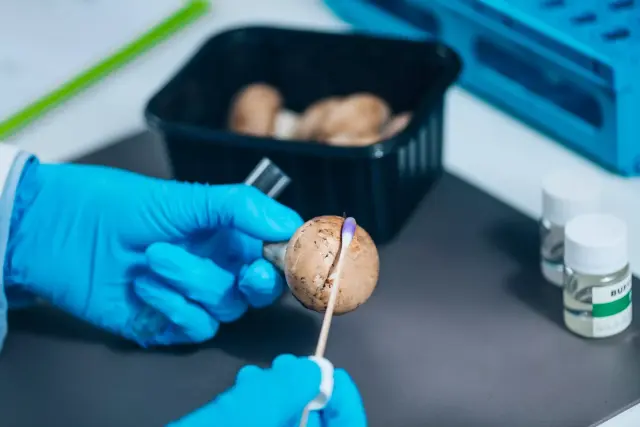
- ATP Testing: They introduced rapid hygiene monitoring (ATP swabs) that detects biological residues invisible to the eye.
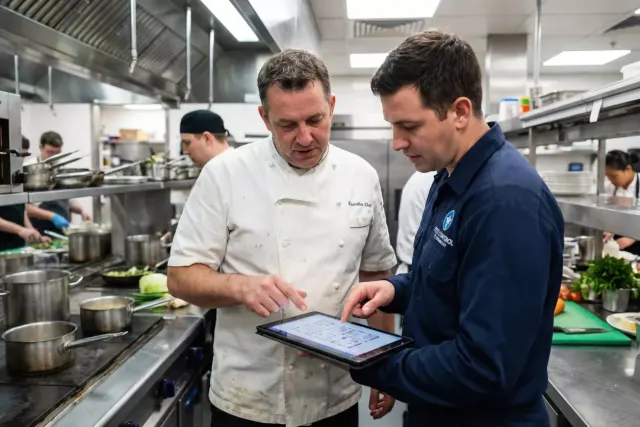
- Digital Accountability: Paper logs were replaced with digital sensors and tablets that required timestamped photos of critical control points.
FSMS for QSR is therefore an important step that they must take to provide good service to customers.
The Science of Sanitization vs. Cleaning
The biggest hurdle in QSR management is training staff to understand that "clean" is only the first step. Cleaning is the physical removal of debris. However, sanitization is a chemical process. If the contact time for a chemical is 30 seconds and your staff wipes it off in five, the bacteria remain. Compliance requires adhering to the manufacturer's "dwell time"- a detail often missed in the rush of a lunch peak.
The Role of Microbial Testing
You cannot manage what you cannot measure. While a countertop may look sparkling, microbial swab testing often reveals a different story. Utilizing swab testing to identify colonies of E. coli or Listeria that survive standard cleaning rounds is vital. Moving from "visual inspection" to "microbial validation" is what separates a high-performing kitchen from a liability-prone one.
Supply Chain Hygiene: The Hidden Risk
Compliance doesn't start at your prep table; it starts at your back door. A common finding in many case studies is that while the kitchen is scrubbed daily, the incoming crates from vendors are contaminated.
Enforcing vendor compliance by setting strict standards through rebuilt systems involves monitoring temperature on delivery trucks and monitoring pest entry at receiving facilities with raw food ingredients.
Building a "Safety-First" Culture
Compliance isn’t limited to physical infrastructure. When the staff think of it like a "chore" rather than viewing it as a "core value", the human component of compliance failure occurs.
A line cook who understands that a faulty gasket could result in foodborne illness will stop cleaning for the manager but clean for the customer.
This culture helps the company maintain a high level of compliance, whether it experiences a service disruption or otherwise.
The Critical Role of Equipment Maintenance
Compliance happens less at the mechanical level than expected. It has been found that the cleaning staff wipe off the external surfaces of machinery without cleaning the internal mechanics of those same machines.
For instance, a walk-in cooler that has an obstructed airflow due to dust build-up on the fan blades. It causes contaminants to be circulated into the food product every time the door to the cooler is opened.
True compliance involves a Preventive Maintenance (PM) schedule where all equipment is disassembled from its location and thoroughly cleaned. It is also examined for signs of wear & tear that could contribute to biofilm growth.
Cross-Contamination: The "Invisible" Violation
Quick Service Restaurants often find that having the pace of business fast can hinder the safety of staff members and customers. You may have thoroughly cleaned your kitchen and removed all visible dirt, but if a team member does not glove after handling raw chicken before touching the screen of the POS (in this case, the point of sale) or opening the fridge, your "clean" kitchen is now not clean.
There could be a high chance of cross contamination in restaurants; but there are ways to reduce that.
To help recreate the set of standards that you build upon, you will want to move to colour-coded tools (cutting boards, tongs and rags for cleaning) and clearly defined hygiene zones. This will allow your managers to see a non-compliance issue from the other side of the room before it becomes a food safety issue.
Handwashing: Beyond the 20-Second Rule
Everyone knows they need to wash their hands, however, compliance monitors how and when this occurs. Moving to a set standard means you're changing from "reminder posters" to "proactive verification".
Some of the other important items include; 1) making sure all handwashing stations are not used for food preparation, 2) containing only touchless soap and 3) ensuring the stations are also used at all transition points from the POS system to food assembly. Tracking employee handwashing through either electronic log or via sensors at sinks gives you the ability to create a standard that can be tracked as a habit.
Operator's Takeaway Points
- Cleaning = an action
- Compliance = a philosophy
- If it's not recorded, it didn't happen.
- ATP Swab test provides the "truth" that visual checks cannot.
Want a hygiene risk assessment for your outlets? Equinox Labs can help you out with this requirement.
FAQs
Cleaning removes visible dirt and food particles. Sanitizing reduces microorganisms to safe levels. You cannot effectively sanitize a surface that still has food debris on it; cleaning must always come first.
Auditors prioritize "Critical Control Points" (CCPs). A store can look beautiful, but if your internal food temperatures are off or your handwash station lacks soap, these are high-risk violations that trigger a failure regardless of how clean the floors are.
Daily cleaning handles high-touch surfaces. Deep cleaning, which includes degreasing exhaust hoods, pulling out heavy equipment, and descaling dishwashers, should be scheduled on a weekly or monthly rotation based on volume and equipment usage.
Absolutely. Digital platforms prevent "retrospective logging" (filling out logs for the whole week at once). They provide real-time alerts to management the moment a fridge temperature goes out of range, allowing for corrective action before the food spoils.