
The 3 Invisible Hygiene Risks Every Facility Manager Must Test For
Most facility hygiene incidents, sick employees, failed audits, indoor air complaints don't come from visible dirt. They come from three invisible zones: your water system, your indoor air, and your canteen supply chain. These risks build silently and surface loudly.
Here are the 3 most undermonitored hygiene risks in Indian facilities: what they cost, and exactly what to do about each one.
| Key Statistic | Finding |
|---|---|
| 72% | Indoor Air Quality (IAQ) complaints are linked to untested HVAC systems. |
| 6 Months | Average interval between water quality tests in corporate facilities. |
| ₹40L+ | Potential cost of a single corporate canteen food poisoning incident. |
| 48 Hours | Average time required to trace contamination when test records are unavailable. |
"The facility manager who runs the cleanest building isn't the one who cleans the most. It's the one who tests the most." — Equinox Labs
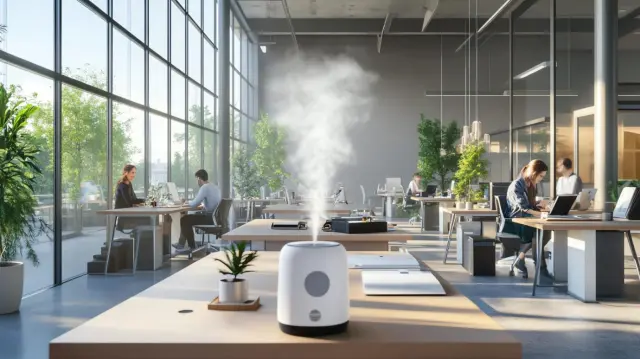
What is Indoor Air Quality (IAQ) Testing and Why is it Important for Offices?
Indoor air quality (IAQ) is the most undermonitored hygiene parameter in Indian workplaces. HVAC maintenance schedules and filter changes prevent dust buildup; they do not eliminate mold colonies in ductwork, elevated CO₂ in sealed rooms, or airborne bacteria.
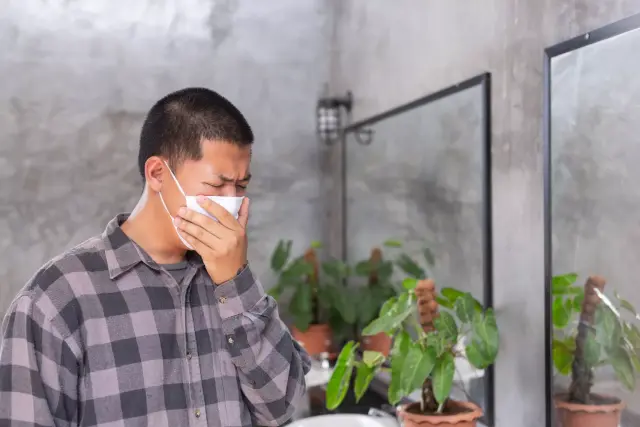
Poor IAQ presents as headaches, fatigue, and respiratory complaints frequently misattributed to stress or personal health when it's actually a testable, fixable building problem.
What Parameters Are Included in an Indoor Air Quality (IAQ) Test?
| Parameter | Health Impact | Action Threshold |
|---|---|---|
| CO₂ | Drowsiness, poor concentration, headaches | Above 1,000 ppm in occupied spaces |
| PM2.5 | Lung irritation, respiratory risk | Above 35 µg/m³ (WHO indoor guideline) |
| Total VOCs | Nausea, dizziness from furniture, paints, cleaners | Any elevated reading in closed spaces |
| Airborne microbes | Mould spores, bacteria from HVAC ducts | Positive Aspergillus or Penicillium counts |
| Relative Humidity | Below 30%: dry air. Above 60%: active mould growth | Outside 40–60% RH range |
Is HVAC Maintenance Enough to Ensure Good Indoor Air Quality?
Filter changes clear visible dust. They do not eliminate microbial colonies on internal duct surfaces mould and Legionella-type bacteria that thrive in humid, dark environments. These are only detected through microbial air sampling and duct swab testing. Relying only on maintenance records means operating on assumption, not data.
Expert Observation
In post-reopening facility audits, the most common IAQ finding was elevated mold spore counts inside HVAC ducts not high CO₂ or PM2.5. Buildings that resumed full occupancy after 2020–2021 shutdowns without IAQ testing carried this risk silently. Employee respiratory complaints were the first visible sign. Quarterly microbial air sampling and annual duct swab testing catches this before any complaint is filed.
Case Study
A 600-seat IT office in Bengaluru had a quarterly HVAC maintenance contract. IAQ testing had never been conducted. Over three months, 40+ employees in one wing filed recurring complaints of headaches and fatigue. An IAQ test found mold spore counts 8× above acceptable levels in two HVAC ducts serving that wing. Remediation cost: ₹3.2 lakh. Partial wing closure: 6 days.
A baseline IAQ test at building occupation and annual duct swabs would have identified the mould before a single complaint was filed.
What To Do
- Conduct a baseline IAQ test in all occupied zones especially conference rooms and dense workspaces.
- Test quarterly: CO₂, PM2.5, total VOCs, relative humidity, and airborne microbial load.
- Duct swab tests annually for mold, Legionella, and bacterial colonies.
- Install continuous CO₂ monitors in high-occupancy meeting rooms alert at 800 ppm.
- Share quarterly IAQ reports with HR and Management with corrective action timelines.
What is Corporate Water Quality Testing and Why is it Important?
Water quality testing is one of the most critical yet overlooked components of facility hygiene management. While water tanks may appear clean, microbial contamination, chemical imbalances, and heavy metals often remain invisible without laboratory analysis.
Understanding Corporate Water Quality Testing
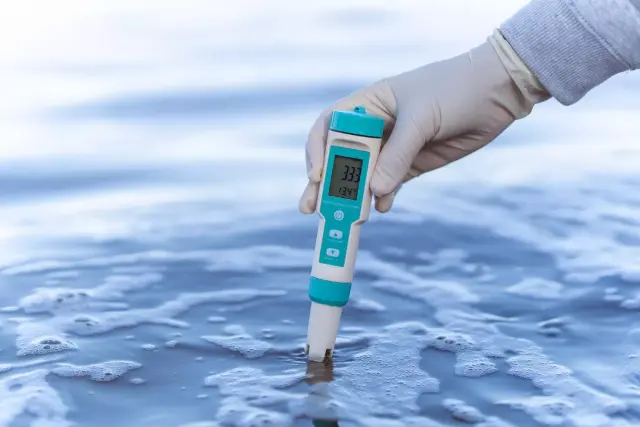
Corporate water quality testing is the laboratory-based analysis of water used within a facility at both the raw inlet and treated outlet stages. The objective is to identify microbial contamination, chemical imbalances, and heavy metal presence before the water reaches employees, visitors, or food preparation areas.
Unlike routine tank cleaning, which primarily removes visible sediment and debris, water quality testing is the only reliable method to confirm whether harmful contaminants such as E. coli, coliform bacteria, nitrates, lead, arsenic, or dissolved chemicals are present in the water supply.
Detects microbial contamination
Identifies chemical imbalances
Screens for heavy metals
Supports regulatory compliance
Best Practice: For Indian corporate facilities, monthly NABL-accredited water testing is widely considered a best practice under FSSAI and WHO hygiene recommendations. Test reports also serve as documented evidence during regulatory inspections, internal audits, and employee health investigations.
How Often Should a Corporate Facility Test Water Quality?
Your water tank was cleaned last month. But when was it last tested?
Cleaning removes visible sediment. It does not remove E. coli, dissolved contaminants, or chemical residues. Only a lab test does that and in most Indian corporate facilities, tanks are cleaned regularly but tested rarely, creating a hidden risk that can persist for months.
What Parameters Should Be Included in a Facility Water Quality Test?
Total Coliform and E. coli — primary indicators of faecal contamination
TDS, pH, and residual chlorine — potability and disinfection effectiveness
Nitrates and heavy metals — critical near industrial zones or older plumbing
Turbidity indicates filtration failure or contamination event
01
Should Raw Inlet and Treated Outlet Water Be Tested Separately?
Testing only treated (outlet) water gives an incomplete picture. Raw inlet water quality varies by season, tanker source, and municipal supply. If inlet TDS or microbial load spikes, your treatment system may be overwhelmed with no visible alarm at the tap until it's too late.
02
FSSAI and WHO Requirements for Corporate Water Testing in India
FSSAI requires monthly testing of process water for microbial and chemical parameters.
WHO recommends potable water testing at point of use not just at the treatment stage.
For tanks above 5,000L: NABL-accredited lab testing every 30 days is considered best practice.
Case Study
A 1,200-employee campus in Pune tested treated water annually. Raw inlet water was never tested separately. A tanker batch introduced elevated nitrates. 34 employees reported gastrointestinal symptoms over 3 days. Canteen closure: 5 days. Estimated loss: ₹8.5 lakh.
Monthly inlet and outlet testing would have flagged the spike before a single litre entered the building.
What To Do
Test raw inlet and treated outlet water separately every month not just when something looks wrong.
Monthly parameters: Total Coliform, E. coli, TDS, pH, residual chlorine, turbidity.
Quarterly: nitrates, heavy metals, hardness especially if tanker water is used.
Use NABL-accredited lab reports accepted by management, auditors, and regulators.
Share results with Building Management and HR monthly. Log corrective actions.
What is a Corporate Canteen Audit and Why is FSSAI Compliance Important?
Food safety incidents rarely begin in the dining area. They begin inside kitchens, storage rooms, cold chains, and supplier processes that are never audited until something goes wrong.
Understanding Corporate Canteen Audits
A corporate canteen audit is a structured inspection of a food vendor's kitchen, storage, cold chain, and food handler certifications against FSSAI and GMP standards. It is distinct from verifying an FSSAI license which only confirms registration, not current hygiene practices.
Under FSSAI regulations, the facility serving food on-premise is classified as a Food Business Operator (FBO) and carries shared compliance liability for everything served in its canteen, regardless of whether the vendor holds a valid license.
Kitchen hygiene inspection
Food storage verification
Cold chain assessment
Food handler certification review
Compliance Note: For Indian corporate facilities, a quarterly vendor kitchen audit is the minimum due diligence standard and the primary legal protection available to a facility manager in the event of a food poisoning incident.
How Do You Audit a Corporate Canteen for FSSAI Compliance?
Your canteen vendor has a valid FSSAI license. But when did you last see their kitchen?
An FSSAI license confirms registration, not current hygiene. It does not tell you whether refrigerators are working, cold chain records exist, food handlers are certified, or raw material storage meets GMP standards. As the facility serves food on-premise, you share compliance responsibility for what is served.
What Are the Most Common Food Safety Risks in Corporate Canteens?
No written hygiene inspection schedule visual checks happen, records don't exist
Vendor kitchen audits never conducted food arrives but you've never seen where it's made
Food handlers lack current FoSTaC certifications or certifications are partial
No food sample testing contaminated food reaches employees before anyone detects it
01
Does a Valid FSSAI License Guarantee Canteen Hygiene?
No. A license confirms registration not current hygiene. It does not verify refrigeration function, cold chain records, FoSTaC certifications, or raw material storage standards. As the facility serves food on-premise, the facility (FBO) shares compliance responsibility. Quarterly vendor kitchen audits are your due diligence record and your protection in the event of a food safety incident.
FSSAI Context
Canteens within corporate premises require a valid FSSAI license. The facility (FBO) carries shared liability for food safety compliance. FSSAI inspection teams conduct surprise visits to institutional canteens especially following illness reports. Facilities without vendor audit records, food handler certifications, or food sample test reports are considered non-compliant.
Canteens within corporate premises require a valid FSSAI license. The facility (FBO) carries shared liability for food safety compliance. FSSAI inspection teams conduct surprise visits to institutional canteens especially following illness reports. Facilities without vendor audit records, food handler certifications, or food sample test reports are considered non-compliant.
How to Conduct a Vendor Kitchen Audit for FSSAI Compliance
Refrigeration temperatures
Cold chain records
Raw material storage
Cleaning SOPs
Pest control records
FoSTaC certifications
Case Study
A 900-employee tech firm in Hyderabad had a vendor with a valid FSSAI license. No kitchen audit had been done in 18 months. The contaminated paneer caused 67 employees to report food poisoning symptoms over 2 days. Canteen closure: 3 days. Non-functional refrigeration and no cold chain records were found at the vendor kitchen.
A quarterly vendor kitchen audit would have flagged the refrigeration failure 3 months earlier. The audit costs less than ₹8,000.
What To Do
Audit your canteen vendor's kitchen this quarter using a FSSAI + GMP checklist. Make it quarterly.
Check: refrigeration temps, cold chain records, raw material storage, cleaning SOPs, pest control.
Verify all food handlers (vendor + in-house) have valid, current FoSTaC certifications.
Commission quarterly food sample testing — microbial pathogens; increase frequency in summer.
Add vendor hygiene audit scores to vendor KPI scorecards; non-compliance triggers a formal review.
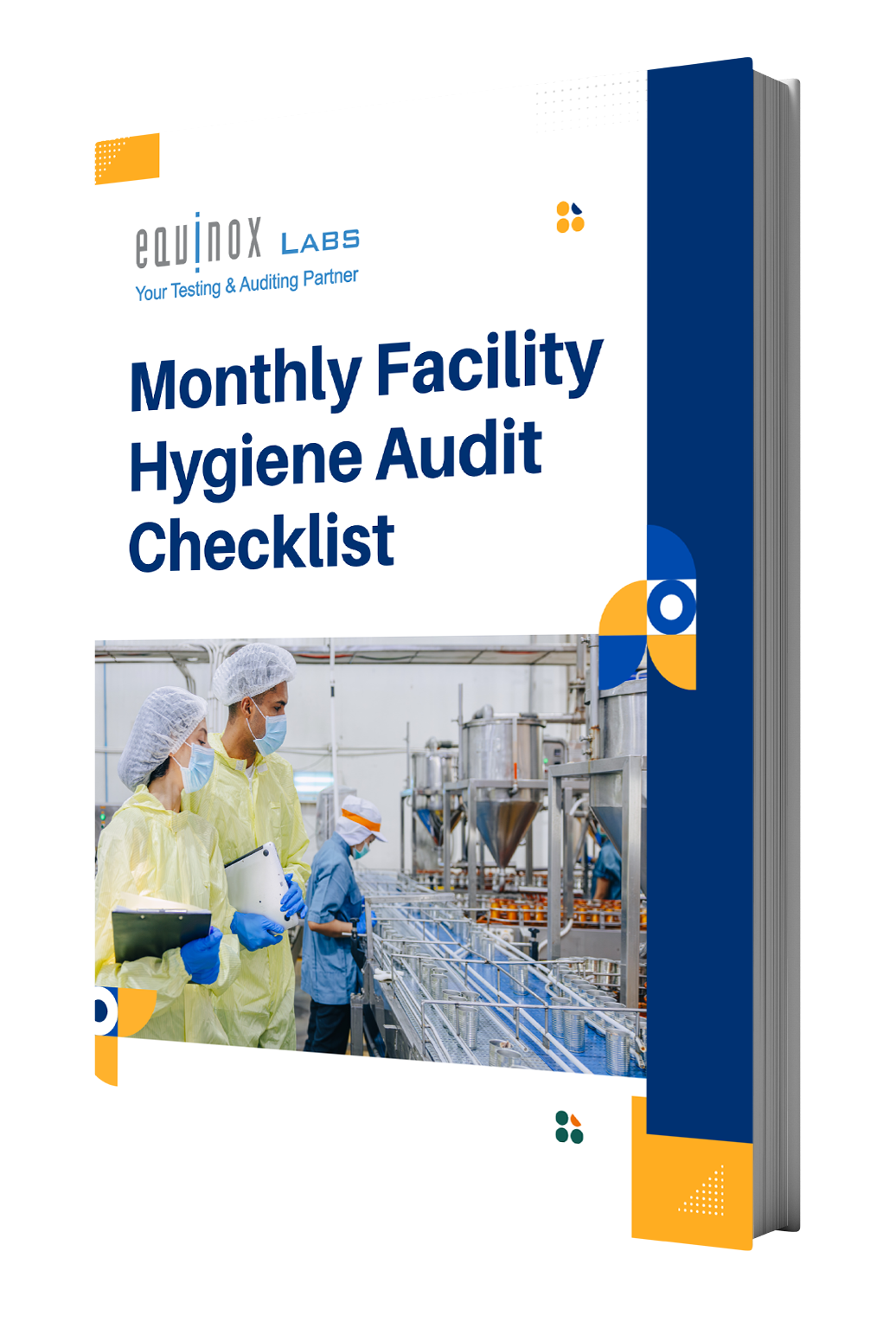
Monthly Facility Hygiene Audit Checklist: Water, Air and Canteen
| # | Zone | Key Question | Frequency | Status |
|---|---|---|---|---|
| 01 | Water System | Tested inlet + outlet separately in the last 30 days? | Monthly | ✓ / ✗ |
| 02 | Indoor Air | IAQ test in the last 90 days? Duct swab in the last 12 months? | Quarterly | ✓ / ✗ |
| 03 | Canteen | Vendor kitchen audited in the last 90 days? Food samples tested? | Quarterly | ✓ / ✗ |
How Can Facility Managers Reduce Water, Air, and Food Safety Risks?
Facility hygiene failures build quietly in water tanks, HVAC ducts, and canteen supply chains for weeks before they surface as a complaint, an illness, or a failed audit. The facility managers who stay ahead of these risks are not the ones who clean more. They are the ones who test more.
Monthly Water Testing
A monthly water test helps identify microbial contamination, chemical imbalances, and water quality issues before they affect employees or trigger compliance concerns.
Quarterly IAQ Assessment
Regular indoor air quality testing detects elevated CO₂, particulate matter, VOCs, mould spores, and microbial contamination that routine HVAC maintenance cannot identify.
Scheduled Vendor Kitchen Audits
A vendor kitchen audit conducted on a fixed schedule helps verify food safety practices, cold chain management, hygiene controls, and FSSAI compliance before incidents occur.
Three actions. Most of the major facility hygiene risks are covered.
A monthly water test. A quarterly IAQ assessment. A vendor kitchen audit on a fixed schedule.
A monthly water test. A quarterly IAQ assessment. A vendor kitchen audit on a fixed schedule.
“
A hygiene problem you find yourself costs a fraction of what it costs when someone else finds it for you.
Frequently Asked Questions
Every month and test raw inlet and treated outlet water separately. Monthly parameters: Total Coliform, E. coli, TDS, pH, residual chlorine, turbidity. Quarterly: nitrates, heavy metals, hardness especially if tanker water is used. Annual testing alone is not sufficient. Use NABL-accredited lab reports for credibility with management and auditors.
IAQ (Indoor Air Quality) testing measures air safety parameters inside a building — CO₂, PM2.5, VOCs, airborne microbial load (mould, bacteria), relative humidity, and formaldehyde. HVAC maintenance prevents dust; it does not detect mold in ducts or elevated CO₂ in sealed rooms. IAQ testing is the only way to confirm the air your occupants breathe is within safe limits. Recommended: quarterly testing and annual duct swab testing.
No. A license confirms registration, not current hygiene. It does not verify refrigeration function, cold chain records, FoSTaC certifications, or raw material storage standards. As the facility serves food on-premise, you share compliance responsibility. Quarterly vendor kitchen audits are your due diligence record and your protection in the event of a food safety incident.
Monthly: Total Coliform, E. coli, TDS, pH, residual chlorine, turbidity. Quarterly: nitrates, nitrites, hardness, heavy metals (lead, arsenic especially in older buildings), and iron. Test both raw inlet and treated outlet water because testing only one provides an incomplete compliance picture.
Create a one-page monthly hygiene summary showing what was tested, what was found, and what action was taken. Use pass/fail indicators against acceptable ranges. Highlight preventive actions your team identified before they became a problem. Management responds best to data that connects hygiene investments with risk reduction and cost avoidance.
Yes. Under FSSAI regulations, the Food Business Operator (FBO) responsible for food served on-premises carries shared liability for food safety compliance, including canteen vendor operations. Factories Act provisions also create accountability for environmental conditions affecting occupant health. A facility that cannot produce water test records, IAQ reports, or vendor audit documentation may be considered non-compliant. Documented testing is your strongest legal protection.