
Quick Answer
The short answer
Closed, fully occupied meeting rooms can accumulate CO₂ and other pollutants within an hour when fresh-air supply is low. This may contribute to drowsiness and headaches, alongside temperature, humidity and plain fatigue.
~420 ppm
Typical outdoor CO₂ level
NOAA Global Monitoring Laboratory
~1,000 ppm
Common indoor CO₂ benchmark for ventilation
ASHRAE (American Society of Heating, Refrigerating and Air-Conditioning Engineers) guidance
~15% lower
Cognitive test scores at ~945 ppm vs ~550 ppm CO₂
Harvard T.H. Chan School of Public Health, COGfx study (2016)
60 vs 15 µg/m³
24-hour PM2.5 limit: India vs WHO
CPCB National Ambient Air Quality Standards; WHO Air Quality Guidelines 2021
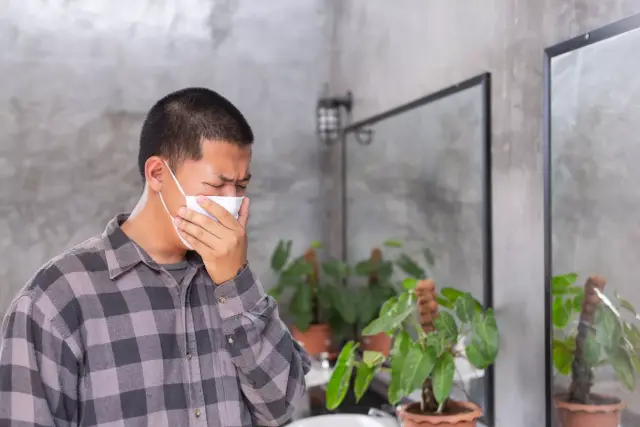
A meeting room seats 12 to 15 people. The AC is on. The doors are shut. Forty-five minutes in, people yawn, rub their temples and stop contributing.
Most facility teams blame long meetings or a cold room. Sometimes that is correct. But the air itself is rarely checked. At Equinox Labs, an NABL-accredited (National Accreditation Board for Testing and Calibration Laboratories, nabl-india.org) and ISO/IEC 17025 laboratory, we see this gap often: HVAC gets serviced, yet nobody measures what the room actually breathes.
This guide is for Facility Managers, EHS (Environment, Health and Safety) teams and Admin heads. It explains what to look at before you decide anything.
Occupancy
What happens to indoor air quality when meeting rooms are fully occupied?
Every person exhales CO₂, and a sealed room has nowhere to send it. When fresh-air supply does not match occupancy, CO₂ climbs steadily through the meeting. Other pollutants and humidity build up too.
A seated adult exhales roughly 18 litres of CO₂ per hour. Take a 60 m² room with a 3 m ceiling (180 m³) and 12 people. With zero fresh air, CO₂ would rise by roughly 1,200 ppm every hour. That is an illustrative calculation, not a measurement. Real rooms leak and ventilate a little. But it shows why the build-up is fast.
There is one catch. CO₂ is a proxy, not a verdict. The ASHRAE position document on indoor CO₂ explains that CO₂ helps judge ventilation against occupancy. It cannot, on its own, prove overall air quality is good or bad. A room can have low CO₂ and high particulates or VOCs.
Indian field evidence points the same way. A 2024 field study of Indian office buildings flagged insufficient fresh-air intake and poor operation and maintenance practices as key IAQ (indoor air quality) concerns. Many offices run AC in recirculation mode to save power. That saves energy and quietly cuts fresh air. For the productivity side of this, read our guide on how indoor air quality influences employee productivity in offices.
Real scenario (illustrative): Pune IT services office
- Problem
- A 14-seat boardroom hosts back-to-back client calls from 10 am to 1 pm. Doors stay shut for AC efficiency.
- Impact
- Staff report headaches and low energy after lunch. Attendance at long meetings drops.
- Action
- The facility team logs CO₂ for one week, finds peaks well above 1,000 ppm, and increases fresh-air damper settings.
What to do
Check the maximum occupancy your meeting rooms were designed for.
Ask your HVAC vendor for the fresh-air (outside air) flow rate per room.
Log CO₂ during real meetings for at least five working days.
Cap meeting length, or add a short door-open break every 45–60 minutes.
Do not judge air quality from CO₂ alone. Plan for PM and VOC checks too.
Key Factors
Which 4 indoor air quality factors affect meeting room comfort?
Four factors matter most: CO₂, particulate matter (PM2.5 and PM10), volatile organic compounds (VOCs), and temperature with relative humidity. They interact, so measuring only one can mislead you.
01
Carbon dioxide (CO₂) and ventilation
CO₂ shows whether ventilation is keeping up with the number of people. Outdoor air sits near 420 ppm. A common working benchmark indoors is about 1,000 ppm. Sustained readings well above that suggest the room needs more fresh air. Harvard's COGfx study found cognitive scores about 15% lower at roughly 945 ppm than at about 550 ppm. That is a controlled study, not an Indian office, so treat it as direction, not a guarantee.
02
Particulate matter (PM2.5 and PM10)
PM2.5 and PM10 are particles under 2.5 and 10 micrometres. They enter with outdoor air, especially in cities like Mumbai, Delhi NCR and Pune, or come from indoor sources like printers, dust and worn filters. Fine particles can reach deep into the lungs. The WHO (World Health Organization, who.int) 2021 guideline for PM2.5 is 15 µg/m³ over 24 hours. India's CPCB (Central Pollution Control Board) ambient standard is 60 µg/m³. Both are ambient benchmarks, not office-specific limits.
03
Volatile organic compounds (VOCs)
VOCs are chemicals that evaporate into indoor air. Sources include paints, new furniture, carpets, adhesives, air fresheners and cleaning agents. Formaldehyde, found in some engineered wood and laminates, is a common one. WHO's short-term guideline for formaldehyde is 0.1 mg/m³ over 30 minutes. A freshly renovated meeting room is a prime suspect.
04
Temperature and relative humidity
A room set too warm feels drowsy. Too cold, and people stop paying attention to anything but comfort. Relative humidity affects both comfort and how long particles and microbes persist. Many offices target about 23–26 °C and 40–60% relative humidity. Confirm the target with your HVAC consultant.
Real scenario (illustrative): Navi Mumbai corporate office
- Problem
- A newly furnished conference room smells "fresh" and causes headaches within an hour.
- Impact
- Staff avoid the room. Meetings move to the cafeteria.
- Action
- The team tests TVOC and formaldehyde, finds elevated levels from new laminates, and ventilates before reuse.
What to do
Record CO₂, temperature and humidity together, not separately.
Note any renovation, new furniture or painting in the last six months.
Inspect return-air filters and grilles for visible dust.
Switch to low-VOC cleaning products for meeting rooms.
Compare readings across rooms to spot the outlier.
HVAC
Why isn't your office AC enough?
AC cools air. It does not guarantee fresh air. Many systems recirculate indoor air and bring in little outside air, so CO₂, particles, and VOCs can stay trapped even when the room feels cool.
Three things get mixed up on most sites. Maintaining an HVAC system means servicing coils, filters and ducts. Monitoring means tracking conditions such as CO₂, temperature and humidity over time. Professional IAQ testing means measuring specific pollutants with calibrated instruments and a defined method, then reporting against benchmarks.
A well-serviced AC can still deliver poor air. Common problems: closed fresh-air dampers, clogged filters, rooms used well beyond design occupancy, and no airflow balancing after layout changes. India's National Building Code (NBC 2016, bis.gov.in) covers ventilation and air-conditioning provisions for buildings. ISHRAE (Indian Society of Heating, Refrigerating and Air Conditioning Engineers, ishrae.in) also publishes IAQ guidance. Use both as reference points when you speak to HVAC contractors.
Real scenario (illustrative): Gurugram co-working floor
- Problem
- AC maintenance is done on schedule, yet one meeting room is always stuffy.
- Impact
- The room is rarely booked despite being the largest.
- Action
- An airflow check shows the room's fresh-air damper was partly closed after a layout change. Rebalancing fixes it.
What to do
Separate your tasks: HVAC maintenance, monitoring, and testing.
Ask whether your AHU (air handling unit) is set to bring in fresh air.
Check that dampers were rebalanced after any layout change.
Replace filters on schedule and record the grade used.
Review meeting room occupancy against design capacity.
Monitoring
What should facility managers and EHS teams monitor?
Start with CO₂, PM2.5, PM10, temperature and relative humidity. Add TVOC and formaldehyde after renovations or when occupants report odours or irritation. Track patterns across the day, not single readings.
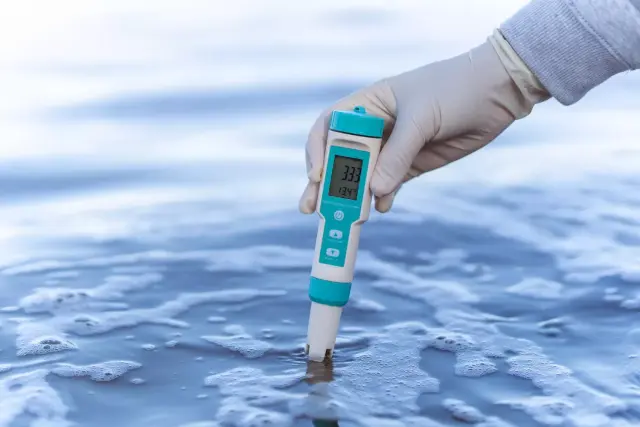
A single spot reading at 9 am tells you almost nothing. Meeting rooms behave like batteries: they charge with pollutants during occupancy and discharge when empty. Monitor at head height, away from AC vents and doors, across a full meeting cycle. Our Facility Manager's guide to using IAQ data includes an 18-point checklist for corporate workspaces.
| Parameter | What It Indicates | Reference Benchmark | Suggested Monitoring |
|---|---|---|---|
| CO₂ | Ventilation vs occupancy | ~1,000 ppm common indoor benchmark; ~420 ppm outdoors | Continuous logging during occupied hours |
| PM2.5 | Fine particle load | WHO 2021: 15 µg/m³ (24-hr); CPCB: 60 µg/m³ | Continuous sensors; periodic lab-grade check |
| PM10 | Coarse dust load | WHO 2021: 45 µg/m³ (24-hr); CPCB: 100 µg/m³ | Continuous sensors; periodic lab-grade check |
| TVOC | Chemical emissions from materials | No single India office limit; compare against a baseline | After renovation or on complaints |
| Formaldehyde | Emissions from wood products, adhesives | WHO: 0.1 mg/m³ (30-min) | After new furniture or fit-out |
| Temperature | Thermal comfort | ~23–26 °C commonly targeted | Continuous logging |
| Relative humidity | Comfort, particle and microbial behaviour | ~40–60% commonly targeted | Continuous logging |
Real scenario (illustrative): Bengaluru manufacturing HQ
- Problem
- EHS receives repeated "stuffy room" complaints but has no data.
- Impact
- Complaints stay anecdotal. No budget gets approved.
- Action
- The team logs CO₂, temperature and humidity in three rooms for two weeks and uses the data to justify an HVAC review.
What to do
Place sensors at seated head height, away from vents.
Log across the full meeting cycle, including the empty period after.
Record occupancy next to every data set.
Track complaints by room and time of day.
Keep a baseline so you can prove improvement later.
Testing
When should you consider professional IAQ testing?
Consider professional testing when monitoring shows repeated exceedances, complaints continue after HVAC fixes, or you have renovated recently. Testing also supports audits, tenant disputes and employee-wellbeing reporting.
Basic sensors tell you something is off. They rarely tell you what, or how accurate the reading is. Professional testing uses calibrated instruments, defined sampling methods and a written report. A laboratory that is NABL-accredited under ISO/IEC 17025 works to a documented quality system and traceable measurements.
Typical triggers: new fit-outs, unexplained odours, persistent headaches or throat irritation, a new building, a move to a sealed glass facade, or a corporate ESG (Environmental, Social and Governance) report that needs defensible numbers. Projects chasing IGBC, LEED or WELL credits need this data too: see our green building certification testing support.
On the law: There is no single dedicated Indian law on office IAQ. The OSH (Occupational Safety, Health and Working Conditions) Code, 2020 places a general duty on employers for a safe and healthy workplace. Confirm current applicability with your legal team.
Real scenario (illustrative): Hyderabad GCC office after fit-out
- Problem
- Two weeks after a new floor opens, staff complain of headaches in meeting rooms.
- Impact
- HR escalates. Leadership wants proof, not opinion.
- Action
- The facility head commissions TVOC, formaldehyde, PM and CO₂ testing and gets a signed report to guide corrective action.
What to do
Define the trigger: complaints, renovation, audit or ESG reporting.
List the rooms and the times that matter.
Ask any lab for its NABL scope and method references.
Request a written report with sampling locations and conditions.
Plan a retest after corrective action.
Equinox Labs
How does Equinox Labs help assess indoor air quality in corporate offices?
Equinox Labs, an NABL-accredited laboratory, helps organisations assess indoor air through relevant parameters: CO₂, PM2.5, PM10, TVOCs, formaldehyde, temperature and relative humidity. We work from your question, not a fixed package.
We do not start with a sales pitch. We start with your complaint pattern: which rooms, what time, how many people. Then we recommend only the parameters that fit. For a stuffy boardroom, that may be CO₂, temperature and humidity first. For a new fit-out, TVOC and formaldehyde come in.
The output is a clear report your facility, EHS and leadership teams can act on. We are based in Navi Mumbai and work with corporate offices across India. See our indoor air quality testing service for scope and enquiries.
Real scenario (illustrative): Mumbai BKC financial services firm
- Problem
- Senior meeting rooms feel stuffy by mid-afternoon.
- Impact
- Leaders shorten meetings and move them off-site.
- Action
- A scoped assessment identifies which rooms exceed ventilation benchmarks, and the team targets fixes there first.
What to do
Share your complaint log and room list before requesting a quote.
Ask which parameters are necessary and which are optional.
Confirm sampling times cover peak occupancy.
Agree how results will be benchmarked.
Decide in advance who acts on the report.
Checklist
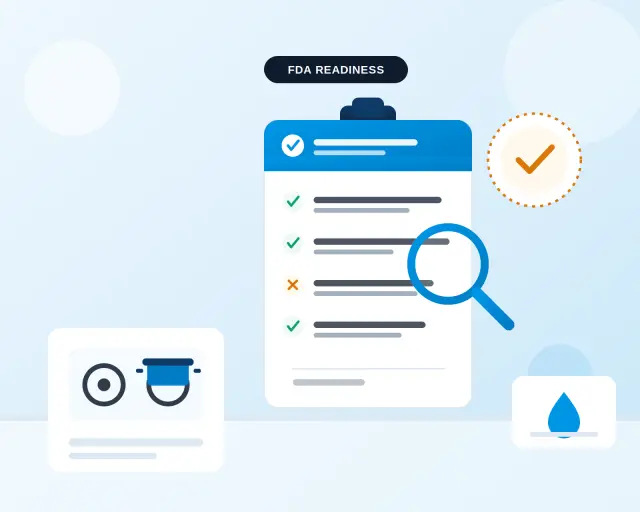
Audit readiness checklist: meeting room air quality
Tick each item ✓ or ✗. Every ✗ comes with the next step to close the gap.
| # | System / Topic | Status | If No → Action |
|---|---|---|---|
| 1 | Design occupancy of each meeting room is known | ✓ / ✗ | Get it from the HVAC design or consultant |
| 2 | Fresh-air flow rate per room is documented | ✓ / ✗ | Ask the HVAC vendor for AHU and damper data |
| 3 | CO₂ is logged during meetings | ✓ / ✗ | Install loggers; log for 5+ working days |
| 4 | Temperature and humidity are logged | ✓ / ✗ | Add loggers; compare against your targets |
| 5 | Filters are replaced on schedule with records | ✓ / ✗ | Create a filter log and a service calendar |
| 6 | Renovations and new furniture are recorded | ✓ / ✗ | Maintain a fit-out register; test TVOC and formaldehyde |
| 7 | Complaints are tracked by room and time | ✓ / ✗ | Start a simple complaint log with time stamps |
| 8 | A professional IAQ test report exists | ✓ / ✗ | Commission testing from an NABL-accredited lab |
A comfortable meeting room starts with understanding the air inside it
Sleepy meetings are not always a people problem. Sometimes the room is the problem. Start small: log CO₂, temperature and humidity through real meetings. Fix what the data shows. Test professionally when the numbers, or the complaints, do not go away.
FAQ
Frequently Asked Questions
AC cools the air but may not bring in fresh air. In a closed room, CO₂ rises as people breathe, and that can add to drowsiness. Temperature, humidity and tiredness also play a part.
Many facility teams use about 1,000 ppm as a working benchmark. Outdoor air is near 420 ppm. Remember, CO₂ shows ventilation, not total air quality.
It can contribute. High CO₂, VOCs and particles are all linked to headaches and poor concentration. If symptoms persist, testing helps separate air quality from other causes.
Use a calibrated CO₂ logger placed at seated head height, away from vents. Record readings across a full meeting. Note how many people were in the room.
There is no single fixed rule for Indian offices. Continuous monitoring of CO₂, temperature and humidity is practical. Professional testing makes sense after renovations, on complaints, or yearly for audit and ESG needs.
HVAC maintenance keeps equipment running. IAQ testing measures what is in the air. You need both, because a serviced system can still deliver poor air.
India has no dedicated office IAQ standard. Employers do have a general duty to provide a safe, healthy workplace under labour and safety laws. Ask your legal team about current applicability.
Cost depends on the number of rooms, locations, parameters and sampling duration. Share your scope with the lab and ask for an itemised quote.
Look for an NABL-accredited lab that works to ISO/IEC 17025. Equinox Labs is based in Navi Mumbai and serves corporate offices across India. Call +91 89769 74310.
Choose a lab with accredited scope for the parameters you need, whatever your city. Equinox Labs works with offices across India. Email contact@equinoxlab.com with your location.