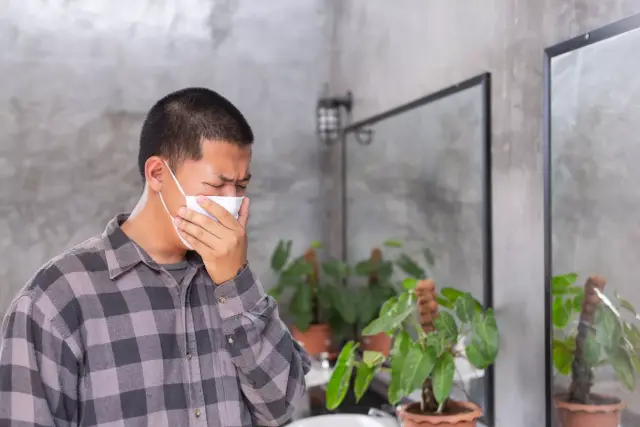
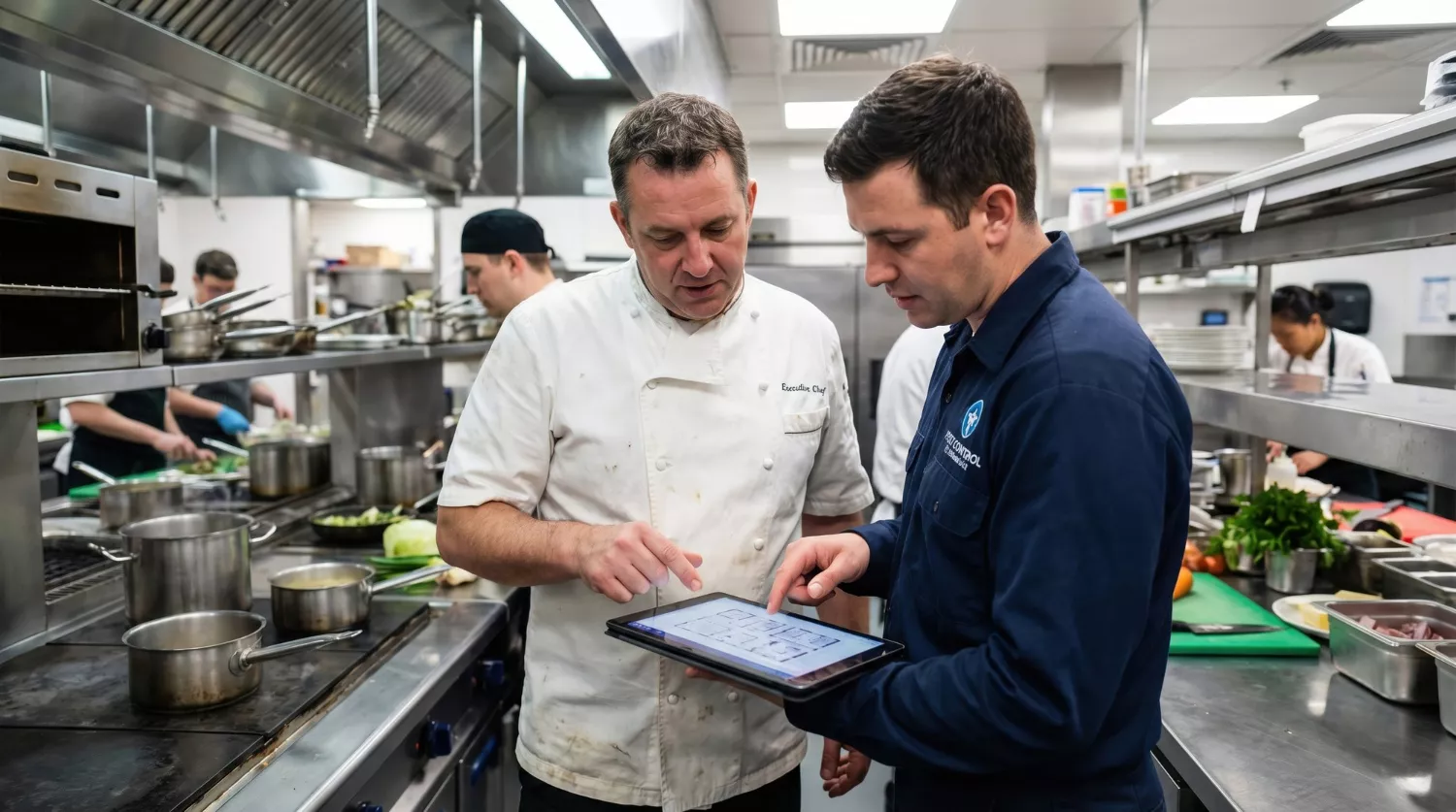
In April 2026, 97 employees at a Bengaluru office were taken ill after meals at the company canteen. Officials sent leftover food for lab testing and began checking storage, water sources and hygiene, because nobody could name the cause by looking. An audit by eye fails the same way.
The Numbers
Why Read This
FSSAI found 34,388 of 170,535 food samples non-conforming in 2024-25, or 20.2%. Of the 33,808 failures in 2023-24, 22,603 were sub-standard, 6,782 unsafe and 4,423 had labelling defects. Globally, WHO's 2026 update estimates 866 million foodborne illnesses and 1.52 million deaths in 2021, with South-East Asia among the heaviest regions. That sampling covers all food, not canteens, so treat it as background. This post gives you a pass/fail limit for six audit areas, taken from FSSAI, BIS, WHO and CDC sources.
| Year | Samples Analysed | Non-Conforming | Share |
|---|---|---|---|
| 2014-15 | 74,010 | 14,599 | 19.7% |
| 2018-19 | 106,459 | 30,415 | 28.6% |
| 2024-25 | 170,535 | 34,388 | 20.2% |
Source: FSSAI data compiled by Dataful.
Quick Answer
Quick Answer
Audit six areas: licence and certification, drinking water, food handlers, storage temperature, pests and waste, and cooking oil with records. Back each with the limit below and a lab report or log, not a visual check.
| Audit Area | Pass/Fail Limit | Evidence to Ask For |
|---|---|---|
| Licence and certification | Licence valid for the actual operator. Eat Right Campus needs 3+ stars, renewed every 2 years | Licence copy, certificate |
| Drinking water | Total coliform and E. coli not detectable in any 100 ml (IS 10500:2012) | Lab report per sample point |
| Food handlers | One FoSTaC-certified supervisor per 25 handlers or part | FoSTaC and medical fitness certificates |
| Storage temperature | Chilled below 5°C, hot food above 60°C, cooked food at room temperature under 2 hours (WHO) | Temperature logs, probe reading |
| Pests and waste | Dated pest-control programme | Service reports, bin and drain check |
| Cooking oil | Total polar compounds (TPC) at most 25% | TPC readings, disposal records |
Audit Area 1
1. Is the cafeteria's FSSAI licence and Eat Right Campus status in order?
01
Check that the licence names the entity running the kitchen, and that any Eat Right Campus certificate is current. Eat Right Campus is a third-party audit by an FSSAI-empanelled agency. A campus that scores three or more stars is certified for two years. More than 2,900 workplaces held it by February 2024.
In one recent campus audit, reviewers checked food handlers' FoSTaC certificates, medical fitness certificates, water reports, food-grade packaging migration certificates and pest-control programmes. Use that list as your document checklist.
Red flag: the licence shows a different business name from the operator.
Audit Area 2
2. Is the drinking water safe at the point of use?
02
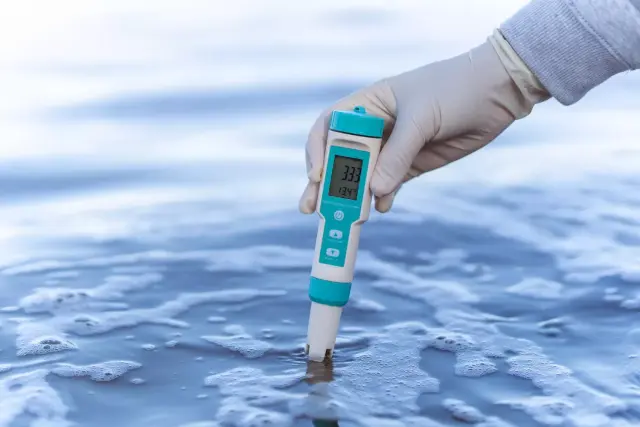
Fail any sample where total coliform or E. coli is detectable in 100 ml. IS 10500:2012 requires neither to be detectable in any 100 ml sample, and water that fails on bacteria is unfit even if the chemistry passes.
Our recommendation: sample every point people drink from or cook with, meaning the tank outlet, RO unit, coolers and kitchen taps, in sterile bottles. Retest after tank cleaning and plumbing work. Water testing at each point shows where contamination enters.
Red flag: the only report on file covers the source, not the taps.
Audit Area 3
3. Are food handlers hygienic and certified?
03
An infected food handler is the most common identified cause in the best-studied outbreak data. In 520 US norovirus outbreaks where a contributing factor was reported, food workers were the source in 70%, and 54% of those involved bare-hand contact with ready-to-eat food. One in five food service workers reported working while sick with vomiting or diarrhoea in the past year.
FSSAI's 25 April 2018 order asks for one certified Food Safety Supervisor per 25 food handlers or part thereof. Verify handwashing with a hand swab test, which measures what the eye cannot.
Red flag: no rule that sick staff stay home.
Audit Area 4
4. Are food and raw materials held at safe temperatures?
04
Probe-check that chilled food is below 5°C and hot food above 60°C, and that cooked food is not left at room temperature beyond 2 hours. These are WHO's Five Keys limits. WHO notes that some dangerous microorganisms still grow below 5°C, so a cold fridge is not a pass on its own.
Gate checks matter too. Near Sriperumbudur, Tamil Nadu, caterers removed foul-smelling chicken from a biryani and served the same rice. Ninety-seven women were hospitalized, the premises were sealed and the licence cancelled. Send periodic food testing samples for high-risk items.
Red flag: temperature logs with gaps or identical readings every day.
Audit Area 5
5. Are pests and waste under control?
05
Ask for a dated pest-control programme, then inspect drains, bins and storage corners yourself. WHO lists protecting kitchen areas from insects, pests and other animals among its Five Keys, and campus auditors review the pest-control programme.
In July 2026, more than 10 employees at a Gujarat factory were taken to hospital after a lizard was found in canteen dal, and two state departments opened an investigation.
Red flag: open bins, or service reports with no follow-up action.
Audit Area 6
6. Is cooking oil within limits, and are records on file?
06
FSSAI bars vegetable oil with TPC above 25%, in force since 1 July 2018. FSSAI links high TPC to conditions including hypertension and liver disease. Businesses using more than 50 litres of frying oil a day must keep usage records and dispose of used oil through FSSAI-authorised agencies. FSSAI's guidance says to discard oil when blue-grey smoke or tough foam appears.
Keep water, swab, oil and food reports from an NABL-accredited lab in one dated file. Without records, you cannot prove control.
Red flag: no TPC reading on file for any fryer.
Next Steps
What should you do after the audit?
Score each area red, amber or green, and fix reds within a set deadline. Share results with the caterer in writing, agree dated actions, and retest anything that failed.
Get your cafeteria audited by a lab
Equinox Labs is an NABL-accredited, FSSAI-notified, ISO-certified food, water and air testing laboratory in Navi Mumbai. We test the water, hands, oil and food behind every item above.
Request a Cafeteria Audit FAQ
Frequently Asked Questions
FSSAI's 2018 order asks for one certified supervisor per 25 food handlers or part thereof, per premises. Confirm whether your licence category makes it mandatory.
25%. Above it, FSSAI says the oil must not be used.
Total coliform and E. coli must not be detectable in any 100 ml sample under IS 10500:2012.
Two years, after which a fresh audit is needed.
FSSAI sets two years for Eat Right Campus recertification. Quarterly internal audits are a common practice, not a rule.