Hand swab analysis for food handlers is a microbiological test used to detect bacterial contamination on the hands of personnel involved in food preparation and processing. It plays a critical role in hygiene monitoring and food testing safety compliance.
Food handlers move between raw materials, equipment, and finished products throughout the day. Even when hands appear clean, harmful microorganisms may still be present. Without verification, cross-contamination can easily occur. This one contamination hand can shut down an entire production line.
According to the World Health Organization (WHO), contaminated hands are among the leading transmission routes for foodborne pathogens. The WHO estimates that foodborne diseases affect 1 in 10 people globally each year, causing 420,000 deaths, many of which are preventable through effective hand hygiene.Routine hand swab testing helps food businesses confirm that hygiene practices are effective and aligned with HACCP and GMP requirements.
What is Hand Swab Analysis?
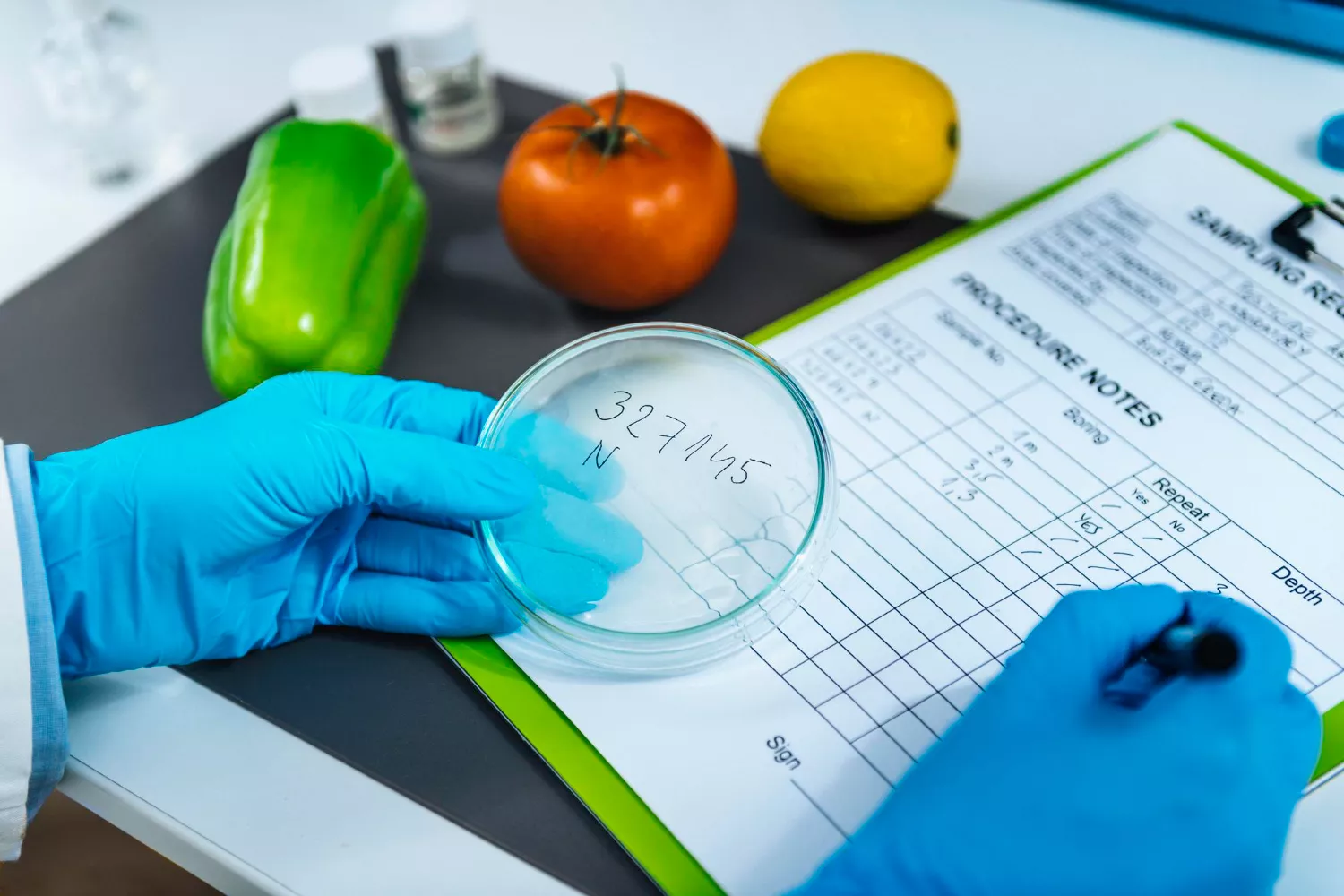
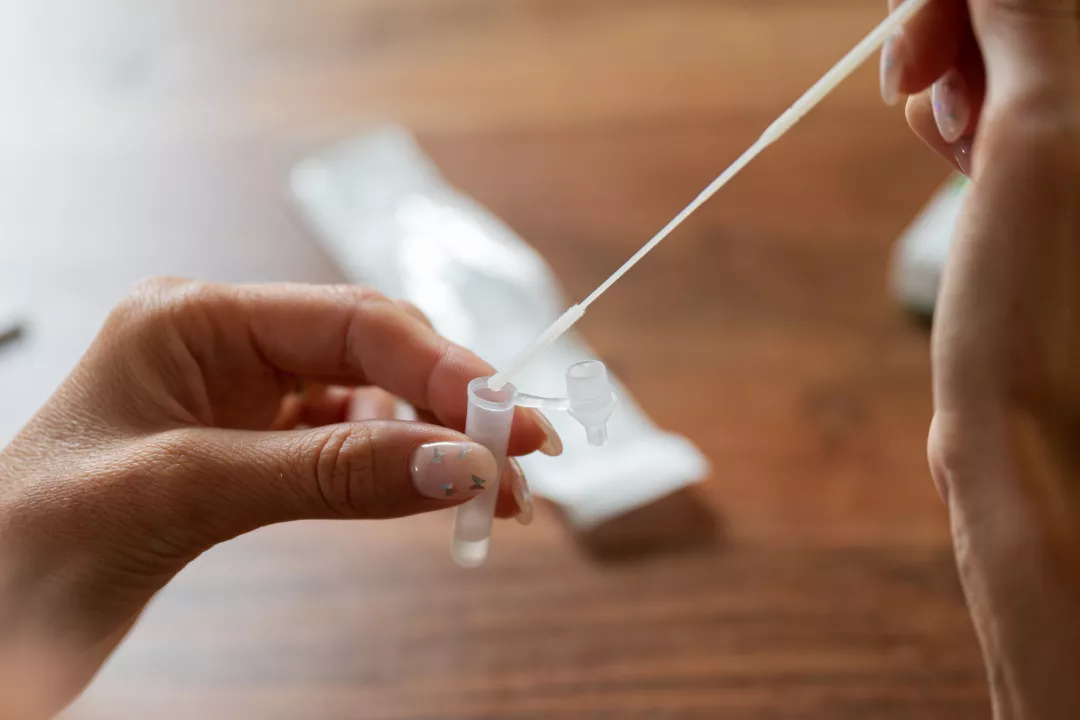
Hand swab analysis is a direct microbial enumeration method used to measure contamination on the hands of food handlers. Samples are collected from palms, fingertips, and under nails using sterile swabs and then cultured in a laboratory to detect bacteria.
In the food industry, a hand swab test is used to:
- Verify personal hygiene effectiveness
- Detect harmful microorganisms before they contaminate food
- Prevent cross-contamination across work surfaces and products
- Support HACCP and GMP compliance documentation
- Maintain food safety audit readiness year-round
Unlike visual checks, hand swab microbial testing provides measurable colony-forming unit (CFU) data that reflects actual hygiene performance data that can be trended, reported, and reviewed.
Hand Swab Test Parameters: Bacteria Detected & Their Significance
The following table summarises the key microorganisms evaluated during hand swab analysis for food handlers, their source, and the food safety risk they represent:
| Organism | Common Source | Risk Indicated | Risk Level | Action Required If Detected |
|---|---|---|---|---|
| Staphylococcus aureus | Human skin, nasal passages | Improper human handling; linked to food poisoning | High | Remove handler, retrain handwashing, retest within 48 hours |
| Bacillus species | Soil, dust, raw ingredients | Environmental exposure or inadequate hygiene | Medium | Inspect raw material contact, sanitise surfaces, retest handler |
| Escherichia coli (E. coli) | Fecal contamination | Serious handwashing failure; high food safety risk | Critical | Immediately restrict handler, investigate hygiene, retrain, retest |
| Citrobacter species | Equipment surfaces, environment | Cross-contamination from surfaces or tools | Medium | Sanitise equipment, retrain on cross-contamination, retest handler |
Note: Monitoring these defined parameters enables early detection of hygiene failures and strengthens food safety compliance before product contamination occurs.
Food Handlers Medical Test Procedure in the Food Industry
Hands of ready-to-eat food service employees have been shown to be vectors in the spread of foodborne disease, mainly because of poor personal hygiene. The hand swab test procedure follows a standardised microbiological method used to detect and quantify bacterial contamination on food handlers' hands.
Materials Required
- Sterile swabs (SABS swab method)
- Nutrient broth for sample inoculation
- Selective culture media for S. aureus and E. coli detection
- Calibrated incubator
- Ice for sample transport to the laboratory
Step-by-Step Procedure (As per WHO Guidelines)
- Collect samples from workers' cleaned and disinfected dominant hands using the swab SABS method.
- Transport samples to the laboratory on ice immediately after collection.
- Inoculate swab samples into 5 ml of nutrient broth in test tubes.
- Prepare serial dilutions from each inoculated tube.
- Subject samples to microbiological analysis to determine Total Plate Count (TPC) and to determine the presence and prevalence of Staphylococcus aureus and Escherichia coli.
- Count colonies and report results as CFU/cm².
Observation & Corrective Action
The legal limit for food surfaces or hands is less than 100 CFU/cm². The study revealed that hand hygiene is unsatisfactory and may have serious implications for public health due to contamination of food from food handlers' hands. This underlines the importance of further training to improve food handlers' knowledge of good hand washing practices.
How to Conduct Hand Swab Analysis for Food Safety Compliance
To be effective, hand swab testing must be systematic, documented, and integrated into the HACCP plan. Best practice includes:
- Defining regular sampling frequency based on risk assessment (e.g., weekly for high-risk areas)
- Conducting testing before shifts begin and after critical activities such as handling raw meat or returning from breaks
- Using validated microbial enumeration methods to ensure reproducible results
- Recording all CFU data in HACCP logs for traceability and audit readiness
- Implementing and documenting corrective actions when limits are exceeded
Compliance Insight:
Structured and documented hand swab testing transforms hygiene from assumption into measurable, defensible compliance data essential during regulatory
audits and third-party inspections.
Choosing the Right Laboratory for Hand Swab Testing
Selecting an accredited laboratory is essential for accurate microbial results and regulatory acceptance. When evaluating a testing partner, ensure they offer:
- NABL accreditation – Mandatory for results accepted by FSSAI and regulatory authorities in India.
- ISO/IEC 17025 compliance – Confirms technical competence and measurement reliability.
- Defined testing for key organisms: Staphylococcus aureus, Bacillus species, E. coli, and Citrobacter species.
- Clear CFU reporting with reference ranges and pass/fail guidance.
- Timely result delivery with digital reporting suitable for HACCP documentation.
About Equinox Labs:
Equinox Labs is a NABL-accredited laboratory providing ISO/IEC 17025-compliant hand swab microbial testing for food businesses across India. Test reports are structured for direct integration into HACCP documentation and regulatory submissions.
Equinox Labs is a NABL-accredited laboratory providing ISO/IEC 17025-compliant hand swab microbial testing for food businesses across India. Test reports are structured for direct integration into HACCP documentation and regulatory submissions.
Conclusion: Measurable Hygiene is Safer Hygiene
Hand swab analysis for food handlers is a critical, non-negotiable component of food safety compliance. It provides measurable evidence of microbial control and significantly reduces the risk of cross-contamination in food handling environments.
By routinely conducting hand swab tests, monitoring defined microbial parameters, and acting swiftly on results, food businesses can detect contamination early, strengthen HACCP systems, and demonstrate audit readiness with confidence.
In food safety, assumption is liability. Verification is protection.
Make microbial verification part of your routine hygiene monitoring strategy — not just an audit requirement.
FAQs
Hand swab analysis for food handlers is a microbiological test used to detect bacterial contamination on hands. It measures microbial growth in CFU and supports food safety compliance under HACCP and GMP systems.
A hand swab test detects Staphylococcus aureus, Bacillus species, E. coli, and Citrobacter species. Each organism signals a specific type of hygiene failure — from poor handwashing to environmental cross-contamination.
A sterile swab is used to collect samples from palms, fingertips, and under nails. The sample is cultured on appropriate media, incubated at 35–37°C, and analysed for CFU count against defined hygiene limits.
It verifies hygiene effectiveness, prevents cross-contamination, and provides documented microbial data required for HACCP, GMP, and regulatory audits. Without it, hygiene performance is unverifiable.
Testing frequency should be determined by risk assessment. High-risk environments (raw meat, ready-to-eat products) may require weekly testing. As a minimum, testing should occur during scheduled audits, after hygiene incidents, and when onboarding new food handlers.
Under FSSAI Schedule 4 (Food Safety and Standards Act 2006), food business operators are required to implement hygiene monitoring as part of their GMP and HACCP obligations. Hand swab
microbial testing is a recommended verification activity. NABL-accredited laboratory results are accepted for regulatory submissions.