Why Prevention Is Better Than Response
By the time employees complain of exhaustion, headaches, or poor concentration, your building's air quality has already degraded.
Modern offices may appear clean with polished floors and climate-controlled air, but they nevertheless contain unseen indoor air contaminants that affect employee health and performance.
For Facility Managers and Admin Heads, the real challenge isn’t cleaning the air after a problem arises, it's detecting indoor air pollution before it escalates into a crisis.
Understanding the Invisible Threat
According to studies, indoor air might be five times more polluted than outdoor air. That’s because confined spaces recirculate contaminants from:
- Paints, furniture, and cleaning agents (VOCs)
- Dust particles (PM₂.₅ and PM₁₀)
- Poor ventilation (CO₂ buildup)
- Moisture and biological contaminants (mold, bacteria)
If not addressed properly, these indoor air contaminants not only cause discomfort, but also long-term respiratory and cognitive difficulties.
The Early Warning Signs of an IAQ Crisis
How can you notice worsening air quality before health problems arise? Look for the following subtle operational and behavioural cues:
- Increased employee absenteeism or "brain fog"
- Odours persist even after cleaning
- HVAC filters clog faster than usual
- Static buildup and dry air discomfort
- Higher energy usage despite constant temperature
Each of these is an early indicator of indoor air pollution that should be investigated using professional monitoring.
Data First: Why Air Sampling Is Non-Negotiable
When it comes to IAQ, guesswork can’t replace data. You can’t fix what you can’t measure, that's why air sampling methods and air sampling techniques are so important.
Professional IAQ assessments use scientific approaches to identify pollutant types, sources, and concentrations.
Common Air Sampling Methods Include:
- Active Sampling: Air is drawn through filters or sorbent tubes using pumps, capturing contaminants for laboratory analysis.
- Passive Sampling: Pollutants naturally diffuse onto collection media, ideal for gases and vapors.
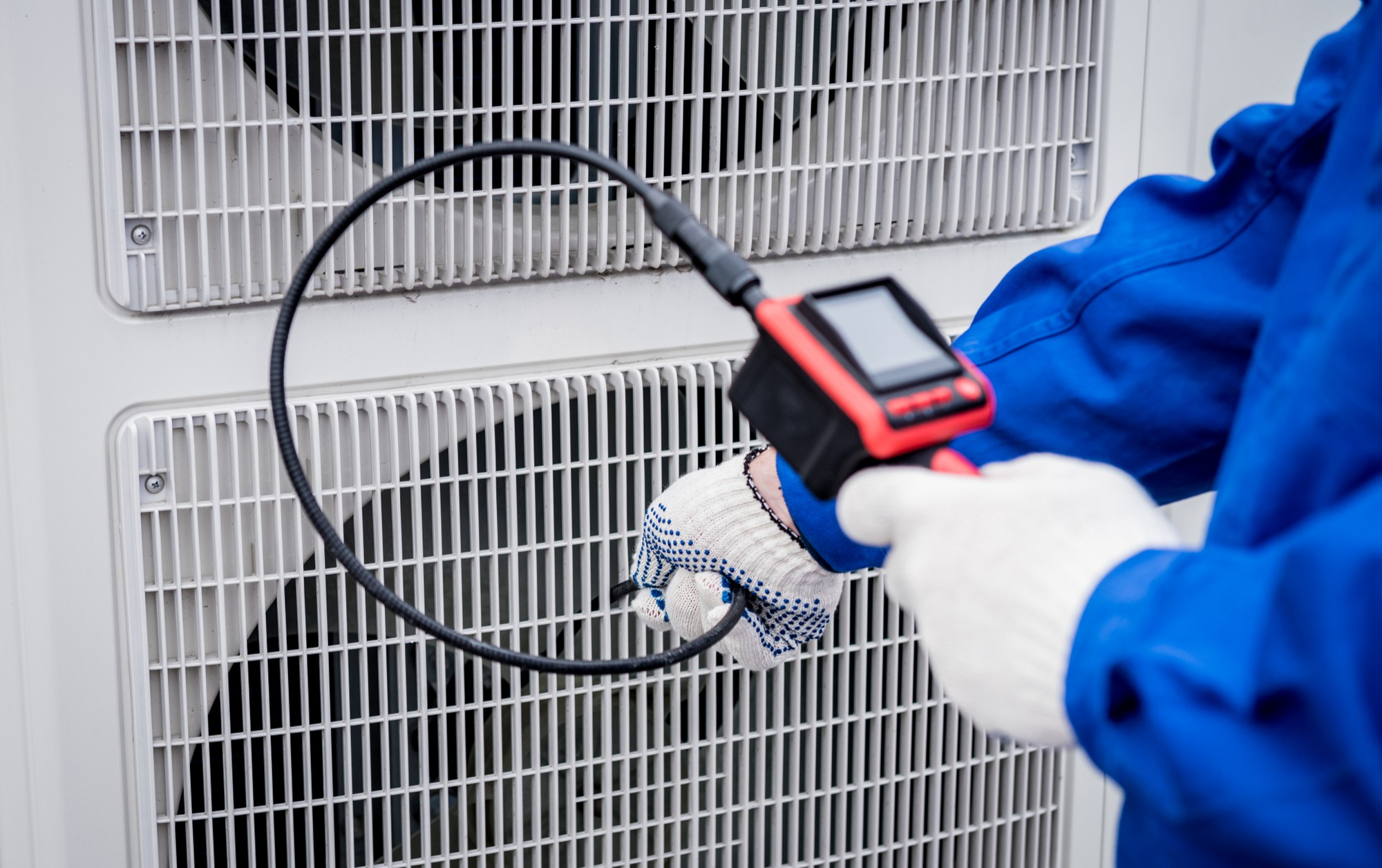
- Real-Time Monitoring: Electronic sensors continuously measure CO₂, VOCs, and particulate levels to detect sudden changes.
These air sampling techniques help Facility Managers in identifying the cause of contamination, whether it be a ventilation defect, chemical residue, or outdoor infiltration.
How to Interpret IAQ Data Like a Pro
Once you get your air sampling results, look for the following crucial indicators:
- PM₂.₅ and PM₁₀ above 40–60 µg/m³ → HVAC filter inefficiency
- VOCs > 0.3 mg/m³ → chemical off-gassing or cleaning residue
- CO₂ > 1000 ppm → indicates poor ventilation and overcrowding conditions
- Relative humidity > 60% → Increase the growth of microbial risk
Using these indicators, managers can determine whether the problem requires HVAC upgrades, source isolation, or maintenance optimization.
Why Home Air Quality Tests Aren’t Enough
A home air quality test may identify basic pollutants, but corporate environments demand professional precision.
Office spaces, data centers, and manufacturing units require calibrated equipment and laboratory-backed analysis to comply with IAQ standards.
Partnering with an accredited testing partner ensures your IAQ strategy is backed by scientific validation, not assumptions.
Equinox Labs: Turning IAQ Data Into Workplace Safety
At Equinox Labs, we help organizations move from reactive fixes to preventive management through certified air sampling methods and advanced IAQ analytics.
Our NABL-accredited experts provide:
- Detailed IAQ assessments and contaminant profiling
- Data-driven insights for compliance and audit readiness
- Actionable recommendations to enhance ventilation, filtration, and maintenance protocols
With over 15,000+ corporate air quality tests conducted, Equinox Labs has become India’s trusted partner in ensuring safer, healthier workplaces.
Final Thoughts
Detecting an air quality issue before the first complaint indicates great leadership.
Facility Managers can avoid health hazards as well as reputational damage by combining air sampling techniques, real-time monitoring, and proactive maintenance.
Because clean air is more than simply a compliance issue; it is about creating an environment in which people can actually breathe, focus, and prosper.
FAQs
By the time employees report fatigue, headaches, or poor attention, the interior air quality has already deteriorated. Preventive monitoring helps
discover and fix indoor air contaminants early on, before they harm health, comfort, and productivity.
Common contributors include VOCs from paints and cleaning agents, dust particles (PM₂.₅ and PM₁₀), CO₂ buildup from insufficient ventilation,
and mould or bacteria from moist HVAC systems.
Air sampling methods are scientific approaches for measuring contaminants in interior spaces. They give reliable data on pollutant levels,
sources, and exposure, allowing Facility Managers to make informed corrective decisions rather than relying on assumptions.
The three most commonly used air sampling techniques are:
Active sampling involves using pumps to collect air for laboratory analysis.
Passive sampling captures contaminants naturally through diffusion.
Real-time monitoring: Sensors continuously detect CO₂, VOCs, and PM levels.
No. A home air quality test only delivers basic results. To comply with IAQ and EHS regulations, workplaces must use professional-grade instruments and NABL-accredited analysis.
Most business facilities should test their indoor air quality on a quarterly basis. High-occupancy or sensitive places (e.g., basements, cafeterias, data centres) may require monthly or bimonthly examinations to ensure constant air quality.
Equinox Labs provides verified air monitoring methods, innovative indoor air quality analytics, and actionable insights. Our NABL-accredited professionals assist organisations in transitioning from reactive to preventive air quality management, assuring compliance and worker safety.